



The era of the “aesthetic-only” designer is over. In 2026, as AI handles the heavy lifting of UI layouts and design systems, the most valuable skill you can have isn’t mastery of a tool; it’s business literacy.
Companies no longer look at design as just a “make it pretty” phase. They see it as a growth engine. But to get a seat at the strategy table, you have to move beyond talking about “user delight” and start talking about “revenue retention.”
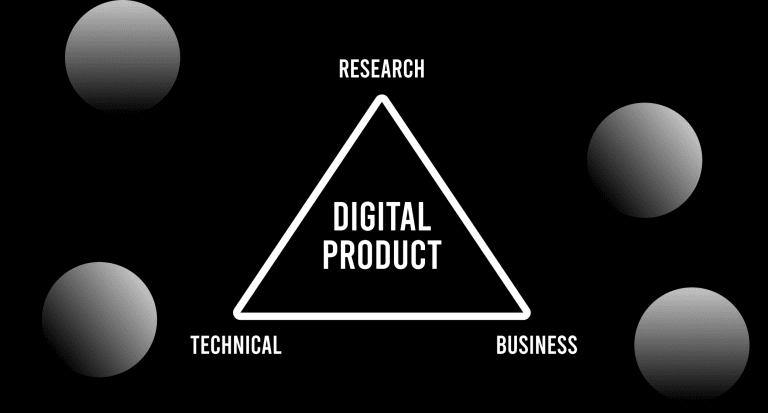
Essentially, the best designers in 2026 have learned to behave like Product Managers. They don’t just advocate for the user; they advocate for the business through the user.
also read: How I became Product Manager
That’s the “what” of the industry today. To get to the “how,” let’s look at the three primary levers that will turn you from a creative asset into an indispensable business partner.
Mastering Unit Economics


To influence a product, you have to understand how it stays alive. Unit economics is simply the study of how much a single user costs the company versus how much they bring in.
As a designer, this means looking past the “happy path” and finding financial friction. If your sign-up flow is beautiful but 40% of people quit halfway through, you aren’t just losing users, you’re burning the money the marketing team spent to get them there.
The metrics you should care about:
- CAC (Customer Acquisition Cost): How much did it cost to get the user to your screen? If your design is confusing, that money is wasted.
- LTV (Lifetime Value): How much is a user worth over time? Designers who build “sticky” habits help the company make more money without spending more on ads.
- Time to Value (TTV): How fast can a user solve their problem? The faster your UX gets them to a “win,” the faster the company recovers its costs.
The Pro Move: Stop saying, “I want to simplify this page.” Start saying, “If we remove these steps, we can lower our abandonment rate and improve our CAC efficiency.”
Data-Driven Storytelling (The PM Mindset)

In 2026, “I have a feeling” doesn’t win arguments. Data does. A huge part of a Product Manager’s job is prioritizing work based on impact. To upskill, designers need to adopt this same behavior.
You need to connect your UX metrics (like “time on page”) to Business KPIs (like “monthly revenue”).
How to tell a story with data:
- Find the Goal: Ask your PM, “What is our #1 goal this quarter?” (e.g., increasing subscriptions).
- Find the Lever: Identify the part of the design that affects that goal (e.g., the pricing table).
- Prove the Impact: Use an A/B test to show that your new design led to a 5% increase in sign-ups.
- The Result: That 5% increase equals $[X] in revenue. Now, your design has a dollar value.
The Stakeholder Translation Layer

You can be a brilliant designer, but if you can’t explain your work to a CFO or an Engineer, it won’t get built. This is where you have to master the Translation Layer.
Stop using design jargon like “white space” or “affordance.” Non-designers don’t always value those terms. Instead, talk about Risk and Opportunity.
Try these swaps in your next meeting:
| Instead of… | Say this… | Why it works |
| “The hierarchy is messy.” | “This layout prioritizes our biggest revenue-maker.” | It shows you care about the bottom line. |
| “The UI feels cluttered.” | “The current complexity is causing a 10% bounce rate.” | It frames the design as a fixable problem. |
| “We need to fix our design system.” | “This will reduce engineering rework by 20%.” | It shows you want to save the company time/money. |
Conclusion: The Indispensable Hybrid

Upskilling in 2026 isn’t about learning a new plugin. It’s about adopting the behavior of a Product Manager while keeping the craft of a Designer.
When you master unit economics, map your work to ROI, and speak the language of business, you become more than a designer. You become a partner that the company cannot afford to lose. You aren’t just making the product look better, you’re making the business stronger.